


Global apparel is one of the biggest industries and is expected to reach $2 trillion in 2026. However, 2025 was a turbulent year as unpredictable tariff hikes and trade disruptions reshaped the business dynamics.
Brands not only have to rethink sourcing and production strategies but also manage supplier networks, shorter product lifecycles, and rising consumer expectations.
In 2026, the fashion and apparel market will continue to be influenced by technology. The data-driven workflows and connected systems will dominate and link design, production, and inventory in real time.
Apart from product quality, brands need to ensure transparency, speed, and agility. With such pressure, the already complex and challenging apparel supply chain becomes difficult to manage. Moreover, the use of manual processes and fragmented tools add to the complexity and prevents streamlining apparel production.
What brands need is an apparel supply chain management software to gain end-to-end visibility and improve operational efficiency. Let us discuss it in detail and why the use of digital solutions like QUONDA, TrackIT, and ColordesQ is significant.
How is Apparel Supply Chain Different
A fashion or apparel supply chain involves a complete journey a garment or accessory take. It includes sourcing materials or fabrics, design, production, distribution, and retail.
The apparel supply chain encompasses multiple sourcing points, manufacturing hubs, and retailers. Garments often pass through long, multi-tier networks from fiber and textile mills to factories and distribution centers. Without specialized systems, it is difficult to coordinate and get maximum visibility.
In contrast with other industries, apparel faces frequent trend changes, seasonality, and design cycles. Fashion products are launched in seasonal collections with hundreds of style, color, and size variants. Demand can spike or fade quickly due to changing consumer trends. This unpredictability makes conventional supply chain planning ineffective without flexible, data-driven workflows.
Unlike previous years, regulatory bodies and consumers drive traceability and transparency. Today’s shoppers want to know where clothes are made, under what conditions, and whether materials are ethically sourced. Conversely, regulators increasingly require digital documentation of supply chains to ensure compliance with labor and environmental standards.
The Modern Apparel Production Model
The new apparel and textile technology is redefining the production model with digital connectivity and real-time data. The goal is to replace conventional, forecast-driven processes with responsive systems that align production with demand, speed, and sustainability requirements.
Let us view some aspects of the modern production model
Evolution from traditional mass production to on-demand manufacturing
Apparel production is moving away from large, fixed-volume manufacturing toward digital and on-demand models. These approaches allow brands to produce closer to demand, reducing excess inventory and operational risk.
Rise of personalized, print-on-demand models driving market growth
Personalized and print-on-demand models enable brands to offer customized products without holding large inventories. By producing only after orders are placed, brands improve efficiency, reduce waste, and meet changing consumer expectations.
Digital workflows reducing waste and cycle time
Connected workflows link design, sourcing, and production that eliminates manual handoffs and delays. Shared data and digital tools streamline collaboration, cut sampling and approval cycles, and reduce material waste.
Impact of digital tools on speed-to-market and sustainability
Digital tools accelerate speed-to-market by enabling faster design iterations and production planning. At the same time, they support sustainability by minimizing overproduction, improving traceability, and optimizing resource use.
Here a comparison between traditional and modern apparel production
Traditional Apparel Production | Modern Apparel Production Model |
Relies on offline communication and fragmented updates |
Uses real-time production data across the supply chain |
Managed through emails, spreadsheets, and manual reports |
Powered by digital, cloud-based collaboration platforms |
Limited visibility into factory performance |
End-to-end transparency across suppliers and factories |
Reactive problem-solving after delays occurs |
Proactive issue detection with data-driven insights |
Longer lead times and slower speed-to-market |
Faster, more agile production cycles |
The Key Challenges Apparel Brands Face
Fashion brands operate in an environment defined by speed, variability, and constant change, making supply chain execution increasingly difficult without connected systems and real-time data.
The challenges apparel and textile brands face are
Demand unpredictability and short product life cycles
Trends shift quickly, leaving little room for error in planning and execution. Products often have narrow selling windows that increase the risk of missed demand or excess inventory.
Inefficient forecasting without real-time data
Without live production and sales data, forecasts rely on outdated assumptions. This leads to poor planning decisions and slower responses to market changes.
Quality control issues
Inconsistent manufacturing standards and manual inspections make it difficult to maintain uniform quality across suppliers. Issues are often identified too late that result in rework and delays.
Color management challenges across production lines
Managing color accuracy across multiple suppliers and production runs is complex. Minor inconsistencies can lead to rejections, delays, and increased material waste.
Production order (PO) tracking difficulties
With multiple production activities happening simultaneously, absence of a control system limits visibility into order status and factory performance. Delayed updates make it harder to identify risks and take corrective action early.
Why Apparel Supply Chain Management Software Matters
Digital solutions deliver end-to-end visibility, control, and agility across the apparel value chain. With real-time data and connected workflows, brands can anticipate disruptions, manage quality proactively, and optimize inventory with greater accuracy.
Triple Tree Solutions provides purpose-built digital apparel supply chain management software solutions for textile and apparel brands. Our solutions enhance quality, production tracking, and color management functions. The goal is to help brands improve speed, operational consistency, and transparency.
The Best Apparel Supply Chain Management Software for Fashion Brands
QUONDA
.png)
QUONDA is a comprehensive digital quality management solution that centralizes and optimizes inline and final inspections across apparel supply chains.
Key Features and How They Fix Apparel Supply Chain Issues
Holistic Dashboard
A single platform to plan and manage quality without the need for spreadsheets. Brands easily gain visibility into every inspection stage.
Real-Time Data and Analytics
Live defect tracking and trends help quality teams catch issues early, reduce rework and ensure on-time delivery.
Bluetooth e-Tape Integration
Automated measurements improve accuracy and reduce manual errors in inspection processes.
Configurable Workflows
Custom inspection workflows adapt to different factories and product types and help align quality checks with brand and global standards.
Comprehensive Reporting
Instant, and exportable reports support compliance, audit readiness, and data-driven quality decisions.
TrackIT
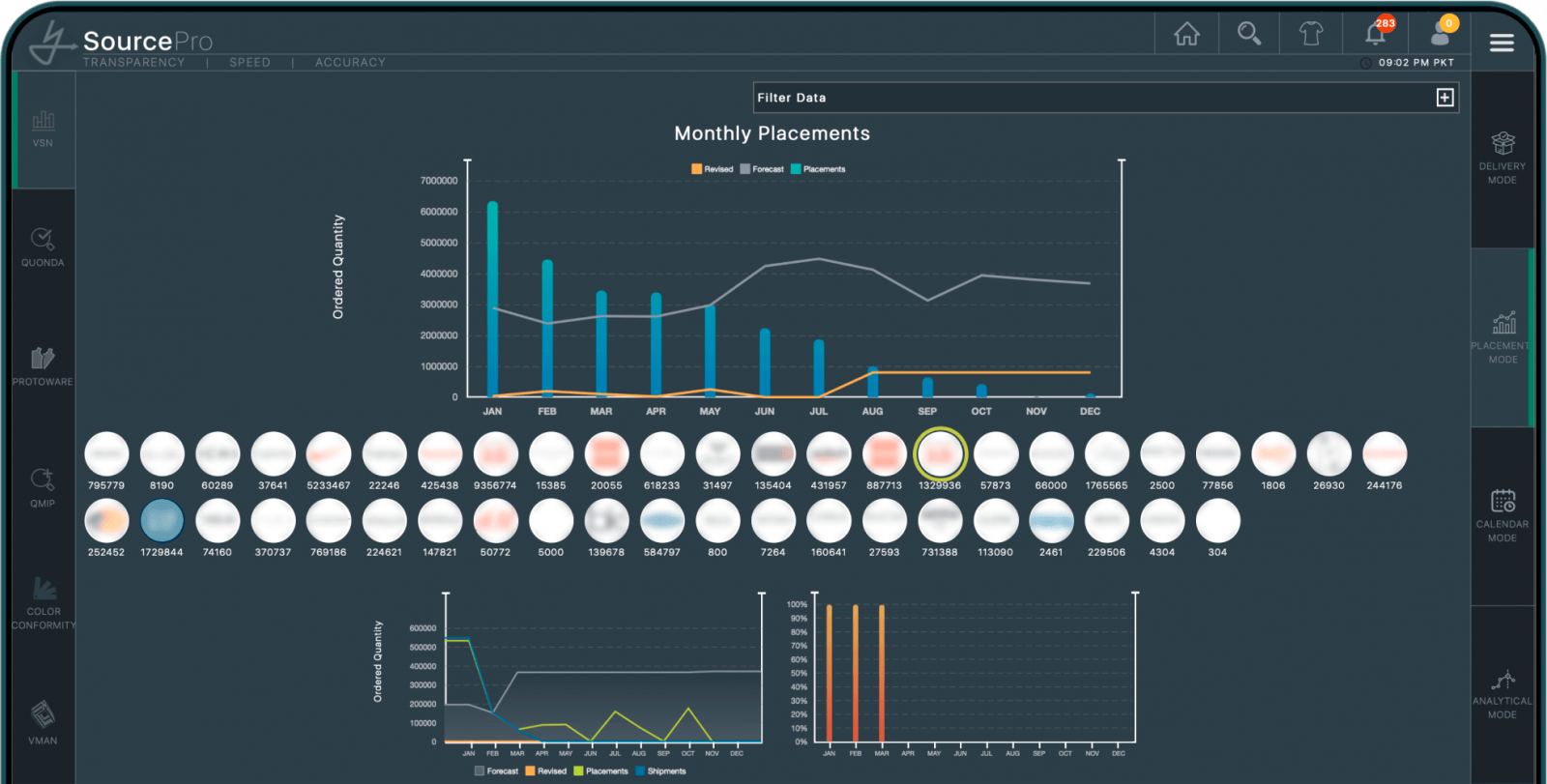
TrackIT is an innovative apparel production tracking software that brings real-time visibility and control to global manufacturing operations.
Key Features and How They Fix Apparel Supply Chain Issues
Real-Time Production Tracking
Live updates on order progress replace manual tracking and help brands spot delays before they escalate.
Time and Action Calendar
Visual milestone tracking ensures key tasks are completed on schedule to improve predictability.
Purchase Order Details
Detailed PO insights (status, quantities, delivery dates) give brands precise visibility control over production.
Predictive Delivery Algorithms
Forecasts potential delays so brands can intervene early and maintain on-time deliveries.
Vendor Performance Analytics
Real-time OTP scores and vendor KPIs help brands assess reliability and make smarter sourcing decisions.
ColordesQ
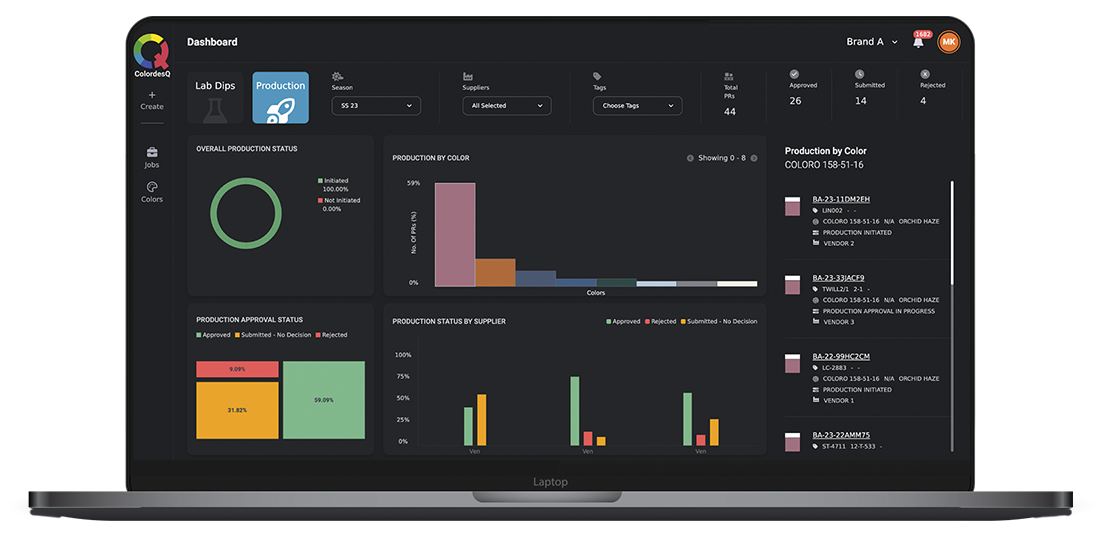
ColordesQ is an advanced digital color management software that ensures consistent, objective color quality across design and production.
Key Features and How They Fix Apparel Supply Chain Issues
Objective Spectral Color Evaluation
ColordesQ uses spectral data to remove subjectivity from color decisions and reduces mismatches.
Cloud-Based Central Color Library
A unified library ensures all teams use the same color standards across locations and seasons.
Faster Approvals and Right-First-Time Rates
Speeds up lab-dip and color approvals that help cut development cycles and minimize waste.
No Physical Swatch Shipments
Eliminates costly and slow physical sample exchanges which saves time and shipping costs significantly.
Real-Time Transparency and Collaboration
Brands and suppliers access the same color results instantly, improving transparency and coordination.
Learn More: The Future of Apparel Supply Chain and What Brands Must Expect and Do
Final Words
As apparel supply chains become more complex, fast-moving, and data-driven, relying on disconnected tools and manual processes is no longer sustainable. Brands that invest in modern apparel supply chain management software gain the visibility, control, and agility needed to manage quality, production, and color consistency at scale.
In 2026 and beyond, success will belong to brands that embrace connected digital solutions to stay resilient, transparent, and responsive to constant change.
From quality to production to color, bring your entire apparel supply chain into sync.
Explore how QUONDA, TrackIT, and ColordesQ work together to deliver real-time visibility, faster execution, and consistent results.