


When it comes to textile and apparel, ‘quality’ is the ultimate differentiator. It is the one factor that brands continuously strive for and what customers value the most.
The equation is simple,
Delivering high quality = Repeat purchases, increased revenue and stronger market share
Sub-standard quality = Costly returns, customer dissatisfaction, and missed opportunities
However, even with the latest textile technology and innovation, the big question remains.
Why do so many brands still struggle to achieve consistent quality?
Unfortunately, working with siloed systems causes a lack of real-time data necessary to identify and fix defects. The outcome is delays and reworks that impact overall production quality.
Let us discuss why brands need to rethink their strategy and more importantly, why they should implement digital inspection software like QUONDA to drive consistent quality and long-term success.
Why Is End-to-End Apparel Quality Important?
Most brands employ traditional quality inspection methods that struggle to keep up with today’s fast-moving apparel industry.
Here is why
- Audits and inspections rely on paper-based checks that are slow due to manual documentation. The biggest disadvantage is late and reactive responses to defects.
- Quality variability increases due to production lines that become complex with diverse materials, varied operations, and factory-specific workflows.
- Fabric is sourced from various sources. However, each fabric type requires different handling, inspection criteria, and production controls.
The fragmented processes break the idea of true “end-to-end” quality. A single issue caught too late whether fabric inspection, cutting, or stitching can ripple across stages and impact output, cost, and delivery commitments.
In fact, industry research shows that the cost of poor quality can reach up to 25% of total sales. It is a sizeable cost that brands surely want to avoid when the ongoing tariffs are already shrinking profit margins drastically.
The solution?
Brands and manufacturers need ‘end to end apparel quality management’. It is a holistic approach that ensures quality control from raw materials through inline processes to final inspection and delivery.
QUONDA is built precisely for this need and offers a digital, real-time platform that connects every quality process, team, and production stage.
Let us discuss what makes it significant for apparel quality inspection.
What is QUONDA?
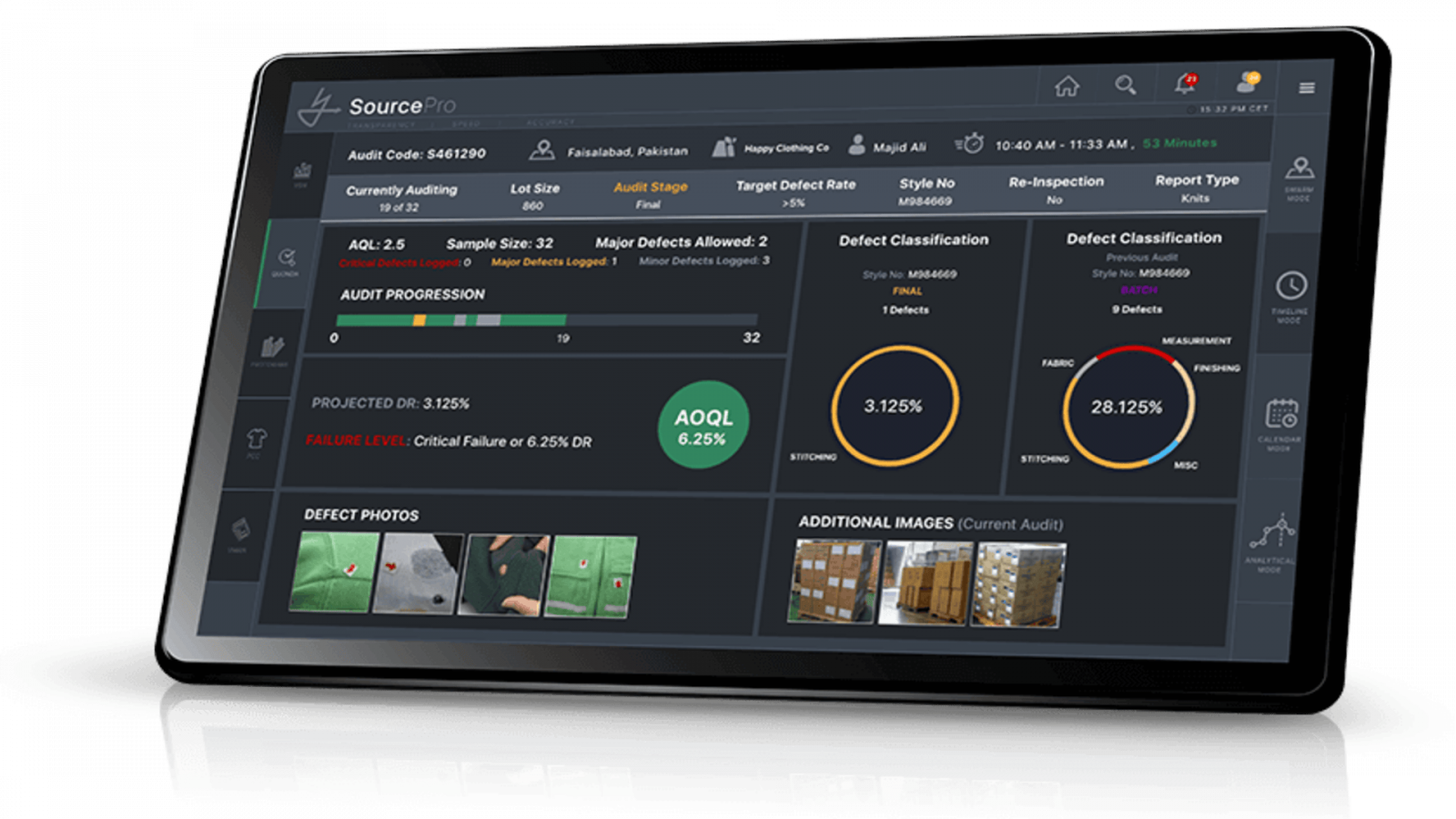
QUONDA is an advanced textile and apparel quality management software designed for brands, retailers, and manufacturers.
Key value propositions
- Replaces slow, paper-heavy inspection methods with a fully cloud-based system
- Captures data in real time, automates reporting, and provides a live dashboard for instant visibility.
- Supports customizable workflows for both inline and final inspections which helps adapt to different product categories, factories, and buyer requirements.
🧭 Traditional vs. Digital Apparel Inspection
| Traditional QC | Digital QC with QUONDA |
Data Entry | Manual, paper-based | Automated via mobile app |
Visibility | Limited to reports | Real-time dashboards |
Decision Speed | Delayed | Instant alerts |
Accuracy | Prone to error | IoT-assisted precision |
Insights | Fragmented | Unified analytics |
Built for global operations, QUONDA is used by 3,400+ users across 45+ countries and completes 50,000+ inspections every month. It centralizes quality data and connects every stage from raw material checks to shipment approval.
Step-by-Step Implementation Guide of QUONDA
QUONDA enables true end-to-end apparel quality, giving brands the visibility, control, and analytics they need to prevent defects, reduce rework, and consistently deliver high-quality products.
Let us discuss and map out each stage
Step 1 – Planning and Setup
A. The first step in implementing QUONDA starts by defining your brand’s quality objectives. This ensures that digital quality processes are aligned with business priorities. It may include
- Inline defect rate targets
- Final inspection pass-rate goals
- On-time delivery performance
- Sustainability and compliance metrics.
B. Next, map your full production flow from material inspection → cutting → sewing → finishing → inspection → shipping. Identify where quality checks currently occur and where additional control points are needed.
C. Bring all the stakeholders into the planning phase. This includes the quality teams, sourcing or supply chain teams, IT support, and factory managers. Their input ensures accurate process mapping and smoother adoption.
D. Configure QUONDA by setting up inline and final inspection types. Customize the workflows at the brand, factory, or regional level. Next, define user roles, devices, and connectivity requirements.
Tip: Begin with a pilot factory or product line to validate processes before scaling across the entire network.
Step 2 – Data Capture and Inspection Activity
A. Once QUONDA is configured, the next step is enabling accurate, real-time data collection on the factory floor. Begin by training inspectors on the QUONDA mobile app, like
- How to log in
- Navigate inspection screens
- Attach photos, and record defects
If you use the Bluetooth e-Tape integration, show teams how the smart measuring system speeds up size verification and eliminates manual errors.
B. For inline inspections, set sample sizes and AQL levels, which QUONDA automatically applies within each workflow. Inspectors can capture defects as they occur, tag severity levels, and upload contextual photos. Supervisors gain immediate visibility through live dashboards, watch inspections unfold in real time, and take corrective action.
C. During final inspections, QUONDA streamlines lot closure with digital signatures, automated report generation, and standardized pass/fail criteria.
Tip: Real-time alerts flag defects instantly and prevent issues from snowballing into costly rework or shipment delays.
Step 3 – Monitoring, Analytics and Continuous Improvement
A. With inspections running digitally, the real goal is continuous monitoring and data-driven improvement. Use QUONDA’s dashboards to track defect trends, supplier performance, and factory-level KPIs. Turn inspection data into actionable insights to improve control.
B. QUONDA provides bird-eye view with map-based active inspections across sites. The multi-location visibility enables managers to compare performance and spot risk areas instantly.
C. Strong quality governance starts with clear KPIs such as defect rate reduction, inspection turnaround time, rework cost savings, and on-time delivery. QUONDA supports these by centralizing all quality metrics in one place.
D. A built-in feedback loop enables ongoing improvement. Conduct root-cause analysis, drive corrective actions with suppliers or factories, and update workflows in QUONDA to prevent repeat issues.
E. QUONDA’s data also supports sustainability and compliance goals by providing transparent reporting aligned with eco-friendly and international standards.
Tip: Schedule monthly review meetings using QUONDA’s analytics to develop improvement plans with your factories and suppliers.
Step 4 – Scale and Integration
A. After a successful pilot, QUONDA can be expanded across additional factories, product lines, and geographic regions. This staged rollout ensures consistency while allowing each location to adapt workflows to their operational requirements.
B. As your quality program matures, QUONDA can be integrated with existing ERP or PLM systems. This ensures seamless data flow across sourcing, production, and quality teams.
C. You can also connect IoT devices such as digital measuring tools to further enhance accuracy and efficiency on the factory floor.
D. When scaling globally, prioritize stable connectivity, standardized processes, and strong data security to protect sensitive production information.
E. To maintain high adoption levels, conduct regular training for new users and schedule periodic audits to ensure proper usage and data accuracy.
Tip: Celebrate wins (defect reduction, cost savings, faster inspection turnaround) to build momentum and adoption
Key Benefits of Using QUONDA for End-to-End Apparel Quality
Managing apparel quality across complex supply chains requires speed, accuracy, and complete visibility. QUONDA brings all these elements together in one unified digital ecosystem designed for modern garment manufacturing.
Here are the benefits that apparel and textile brands get
Centralized Platform
One dashboard replaces scattered spreadsheets and paper files and provides a single source to manage all inspection activities.
Real-time Visibility
Track inspection progress as it happens that allows supervisors to take immediate corrective action and prevent issues from escalating.
Customizable Workflows
QUONDA adapts to brand, factory, and regional requirements to ensure flexible, standardized processes that fit each production criteria.
Improved Measurement Accuracy
Mobile inspections and e-tape integration speed up measurement checks and remove manual errors.
Data-driven Decision-making
Analytics and dashboards provide trends, recurring defects, and root causes to support continuous improvement.
Multi-factory/global support
Easily scale quality control across suppliers and regions while maintaining consistent standards.
Sustainability and Compliance Support
Provides transparent data to help brands meet international sustainability, social compliance, and consumer expectations.
ROI and Cost Savings
Fewer defects, less rework, and top quality contribute to measurable financial and operational gains.
Potential Challenges and How to Overcome Them
Implementing a digital quality platform can bring transformational results, but it also requires thoughtful planning.
Here are common challenges brands may face and practical ways to overcome them.
Initial setup and training
Teams may need time to learn new workflows, mobile tools, and digital inspection steps.
Connectivity and reliance on cloud/internet
Unstable factory networks can impact real-time syncing and data capture.
Resistance to change
Inspectors and supervisors may prefer familiar manual or paper-based processes.
Integration with legacy systems or supplier readiness
Older systems or less tech-ready suppliers may struggle with initial adoption.
How to overcome these challenges:
- Start with a pilot to refine workflows and support change management with clear training plans.
- Validate connectivity and IT infrastructure before scaling.
- Engage auditors early and highlight benefits like faster inspections and reduced defect rates.
Conclusion and Next Steps
Achieving true end-to-end apparel quality is essential in today's competitive business setting. However, brands need full visibility, control, and data across every production stage. This includes raw material checks, inline audits, and final inspections.
QUONDA delivers exactly that by replacing manual processes with real-time digital visibility. The scalable workflows, and innovative analytics help meet the demands of the global apparel supply chains.
To get started, schedule a QUONDA demo or trial, map your current inspection workflows, and identify a suitable pilot factory or product line.
Ready to elevate your quality management?
Contact Us to Learn More and Schedule a Demo
✅ Checklist: Pre-Implementation Questions for a Brand (Your Team)
Focus Area | Key Questions to Ask | Why It Matters |
Connectivity & Infrastructure | - Do all factory sites have stable internet access? - Are mobile devices (phones/tablets) available for inspectors? - Is Wi-Fi coverage reliable inspection areas?
| -QUONDA is a cloud-based solution; dependable connectivity ensures real-time data flow and uninterrupted inspections. |
User Roles & Access Control |
- Who will manage user accounts and permissions? - Which teams need access to dashboards, reports, and analytics? - How will approval hierarchies be structured?
| -Defining clear roles avoids confusion and ensures accountability at every inspection stage. |
Workflow Design |
- What are our current inspection processes (inline, midline, final)? - Where do delays or errors typically occur? - Which workflows should be standardized or customized in QUONDA?
| -Mapping current workflows helps tailor QUONDA’s configuration for optimal performance and efficiency. |
Pilot Factory / Product Line |
- Which factory or product category is best suited for the pilot? - Does it have engaged leadership and stable operations? - What KPIs will define pilot success (defect reduction, faster approvals, etc.)?
| -Starting small reduces risk and builds momentum for full implementation. |
Training & Change Management |
- Who will lead internal training sessions - Do we have multilingual support for factory staff? - How will we gather feedback from inspectors and supervisors on post-training?
| -Effective onboarding ensures user adoption and minimizes resistance to digital transformation. |
Integration Readiness |
- Do we plan to link QUONDA with ERP, PLM, or supplier portals? - What data must flow between systems - Who manages integration and security compliance?
| -Integration streamlines data flow and enhances visibility across all quality operations. |