


Color selection and approval are two of the most crucial elements in apparel production. For every season and every collection brands have to make a careful selection of designs and colors.
The biggest challenge is turning the color standards across fabrics, trims, materials, and multiple production batches. Even small deviations lead to mismatched garments, rejected batches, rework, production delays, and increased costs.
To avoid these issues, apparel brands need to ensure color quality metrics. The approach includes measurable KPIs that help track the efficiency of textile color accuracy.
However, the traditional color workflows hinder the complete process and add to the complexity and inefficiency.
Let us explore why brands need a digital color management solution like ColordesQ to track and ensure these KPIs but significantly improve them.
What Are Apparel Color Quality KPIs and Why It Matters
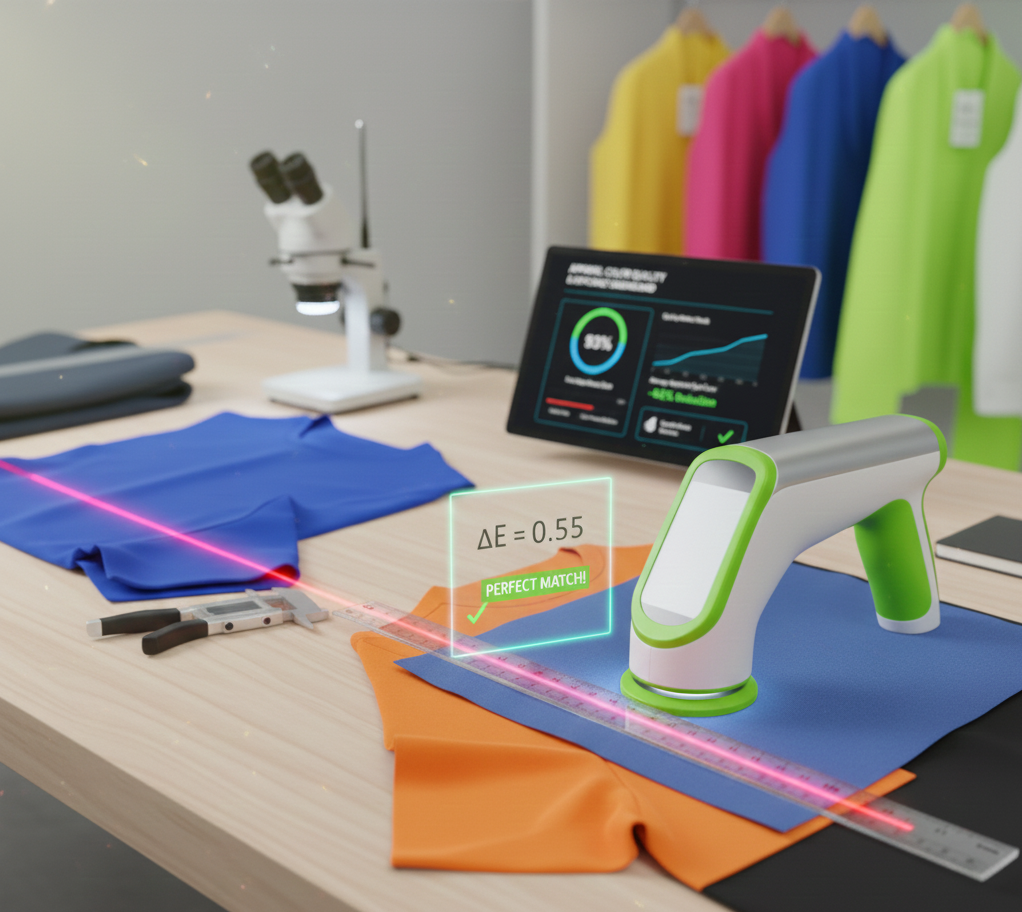
Color quality metrics (or KPIs) are the measurable indicators that help apparel brands evaluate how well the color development, color matching, and production workflows are performing. These metrics determine the accuracy, efficiency, and reliability of color execution across the apparel supply chain.
Here are some of the most important KPIs:
1. Color Match Rate/Accuracy
It shows how precisely the final produced fabric color matches the established color standard (often a color code or swatch) within an acceptable tolerance range.
2. First-Pass Match Rate
It indicates how often the lab-dip or sample submitted by the supplier matches the brand’s target color at first attempt without requiring revisions. A high first-pass rate means fewer rounds of dyeing, faster approvals, and lower cost.
3. Color Deviation (ΔE Values)
Color difference (Delta E) measures how far a sample deviates from the target color. Lower ΔE means better accuracy. Analyzing Delta E consistently ensures product uniformity and reduces visual defects.
4. Colorfastness (Test Report Pass Rate)
This metric tracks the percentage of products that pass specific tests for color durability. It includes resistance to washing, light exposure, rubbing, and perspiration. A high pass rate is a critical quality indicator.
5. Defect Rate (Color Issues)
It is a specific metric that measures the percentage of garments with color-related defects (e.g., shading variations between panels, stains, and incorrect color trims/accessories) out of the total inspected units.
6. Rejection and Rework Rate
It is a broader metric that includes all types of defects. This KPI tracks how many samples fail to meet standards. A high rejection rate shows issues with communication, dyeing processes, equipment, or color evaluation methods.
7. Approval Cycle Time
It shows the time it takes from color request to approval. Long cycles delay bulk production and push back launch timelines. Conversely, faster approvals mean quicker time-to-market.
8. Supplier Performance Metrics
Brands monitor how each supplier performs in terms of accuracy, cycle time, consistency, and rework. Transparent supplier KPIs help identify reliable partners and uncover inefficiencies. It ensure uniformity across trims, batches, fabrics, and seasons.
9. Sustainability and Cost Metrics
It is one of the most important metrics today with the increasing negative impact of textile production and consumption.
Various metrics are analyzed of the physical samples that include
- sample shipping costs saved
- dye/chemical usage reduced
- carbon footprint reduction
These metrics are essential for fewer physical samples, lower shipping and courier costs, and less environmental impact
Common Challenges Apparel Brands Face in Managing Color Quality
Color selection and approval are the first steps in the entire apparel production that defines a season. However, successfully managing the apparel color quality metrics relies on the type of methods that a brand employs.
Most brands use traditional systems that comes with the following issues
1. Subjective Visual Assessments
Human eyes see color differently depending on lighting, fatigue, and the environment. What looks “acceptable” to one reviewer may look off to another.
2. Inconsistent Lighting Conditions
Color evaluations done under different lighting conditions often cause metamerism. The color may match in one light but appear different in another.
3. Lack of Centralized Color Standards
Without a unified color library or digital reference, suppliers may work from outdated standards or inconsistent swatches.
4. Long Approval Cycles Due to Physical Sampling
Physical lab dips require courier shipping that leads to:
- 2–7 days per cycle
- High courier costs
- Multiple back-and-forth iterations
The conventional process slows down the entire production timeline.
5. Communication Gaps Between Teams
When feedback is scattered across emails, spreadsheets, or messaging apps, suppliers struggle to understand the initial requirements or corrections clearly.
6. No Real-Time Performance Tracking
Without the innovative digital tracking tools:
- brands cannot measure first-pass rate
- supplier performance stays opaque
- recurring issues go unnoticed
7. Variation Among Fabric Types and Dyes
For a particular season, the selection of fabrics and fibers may absorb certain types of dyes differently. This leads to unavoidable shade variations that make it difficult to maintain consistent color across materials and product categories.
How ColordesQ Solves Apparel Color Quality KPIs
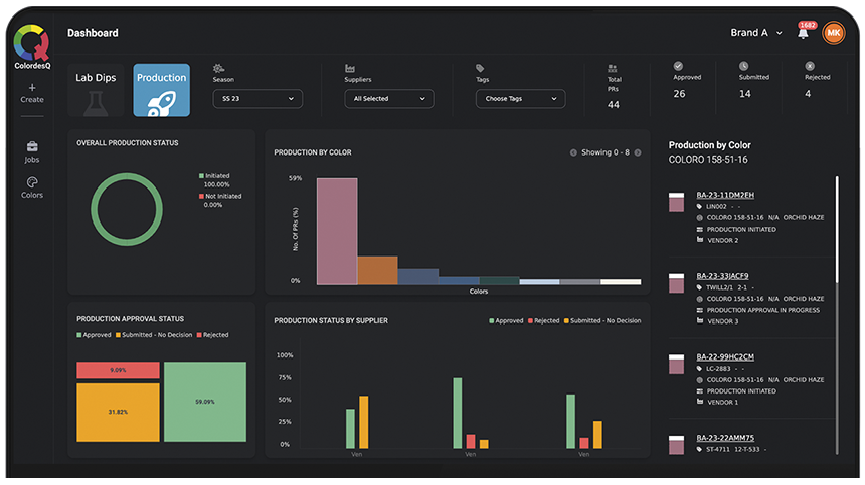
ColordesQ is a digital color management solution designed specifically for textile and apparel brands. Triple Tree Solutions, having two decades of experience in the textile industry, has developed it. The goal is to convert traditional, subjective workflows into standardized, objective, and data-driven processes.
Here’s how the innovative features of ColordesQ help manage the various color KPIs
1. Objective Spectral Color Evaluation
Instead of depending on visual judgment alone, ColordesQ uses spectral data and multi-illuminant evaluation to determine color accuracy.
Impact:
Improves first-pass match rate
Reduces color deviation (ΔE)
Cuts down rework cycles
2. Centralized Digital Color Library
Brands can upload, organize, and update their color standards. This includes QTX files and digital measurements that ensure all suppliers work with the same reference.
Impact:
Eliminates outdated standards
Ensures consistency across fabrics and trims
Enhances supplier alignment
3. Streamlined Digital Workflow
ColordesQ digitizes the entire apparel color selection and approval process. The dashboard acts as one platform whether it’s creating color jobs, submitting lab dips, reviewing samples, adding comments, and approval.
Impact:
Reduces approval cycle time
Minimizes courier/shipping needs
Keeps all communication in one system
4. Supplier Performance Analytics
The dashboard of digital color management software gives brands real-time visibility into supplier accuracy, rejection rates, and cycle times.
Impact:
Strengthens accountability
Enables data-driven supplier selection
Identifies recurring issues early
5. Multi-Illuminant and Material Evaluation
Samples can be evaluated under different lighting and across different materials (knits, wovens, denim, trims).
Impact:
Prevents metamerism
Ensures consistency across components
Reduces costly production-stage surprises
6. Reduced Waste and Environmental Impact
Digital approvals drastically cut down the number of physical samples needed.
Impact:
Sustainability KPIs improve
Lower carbon footprint
Reduced material and dye waste
Benefits of Using a Digital Color Management Solution
.jpg)
Beyond just improving KPIs, color management and color quality control, ColordesQ brings broader operational and strategic advantages to apparel brands.
Let us run down the advantages
1. Faster Time-to-Market
With digital approvals and fewer re-dye cycles, brands can move from concept to production much faster in trend-driven markets.
2. Reduced Production Costs
Accurate, first-time apparel color matches save:
- dyeing costs
- extra sampling
- re-dye batches
- courier expenses
- inspection time
3. Increased Consistency Across Collections
Whether it’s a global brand with multiple suppliers or a brand with diverse material types, ColordesQ ensures unified color outcomes.
4. Stronger Supplier Collaboration
Transparent data and unified workflows help suppliers deliver better results and understand exactly what brands expect. This helps to accurately and efficiently manage the color quality KPIs.
5. Improved Quality and Customer Satisfaction
Accurate colors reduce the risk of mismatched garments, uneven dye lots, and customer dissatisfaction.
6. Sustainability as a Competitive Advantage
In today’s market, reducing waste and carbon footprint is the number one priority for all apparel brands. Digital color management software supports that goal most effectively.
Learn More: How ColordesQ solves the High Cost of Color Inaccuracy in Apparel
Final Takeaway
Apparel color quality metrics are essential for ensuring consistency, reducing rework, and controlling costs in a complex global supply chain. The traditional color matching methods are prone to subjectivity and delay. Conversely, digital color control solutions create a measurable, reliable, and efficient workflow.
ColordesQ brings structure and accuracy to the entire color approval process. By leveraging spectral evaluation, centralized color libraries, real-time workflows, and performance analytics, it helps brands significantly improve their KPIs.
If your brand wants to boost efficiency, reduce waste, and gain full control over color quality, ‘ColordesQ is the best solution.’
Ready to Transform the Apparel Color Management Process?