


Textiles are one of the largest industries and encompass multiple processes and activities. According to Textile Exchange’s Materials Market Report, global fiber production reached all time high of 124 million tons in 2023. The fiber is used in producing apparel, footwear, home textiles, and other applications.
Apart from the increase in production, a textile brand has to manage other developing trends in the industry. These include fast fashion, traceability, innovative fabrics, digital product passes, and waterless dyeing.
To manage such diverse aspects along with ever-changing consumer demands and tight deadlines, brands need efficient production planning to achieve success. The term production planning, also known as apparel production planning and control is essential in the textile industry to ensure optimal utilization of resources and maintain product quality.
The Importance of Apparel Production Planning
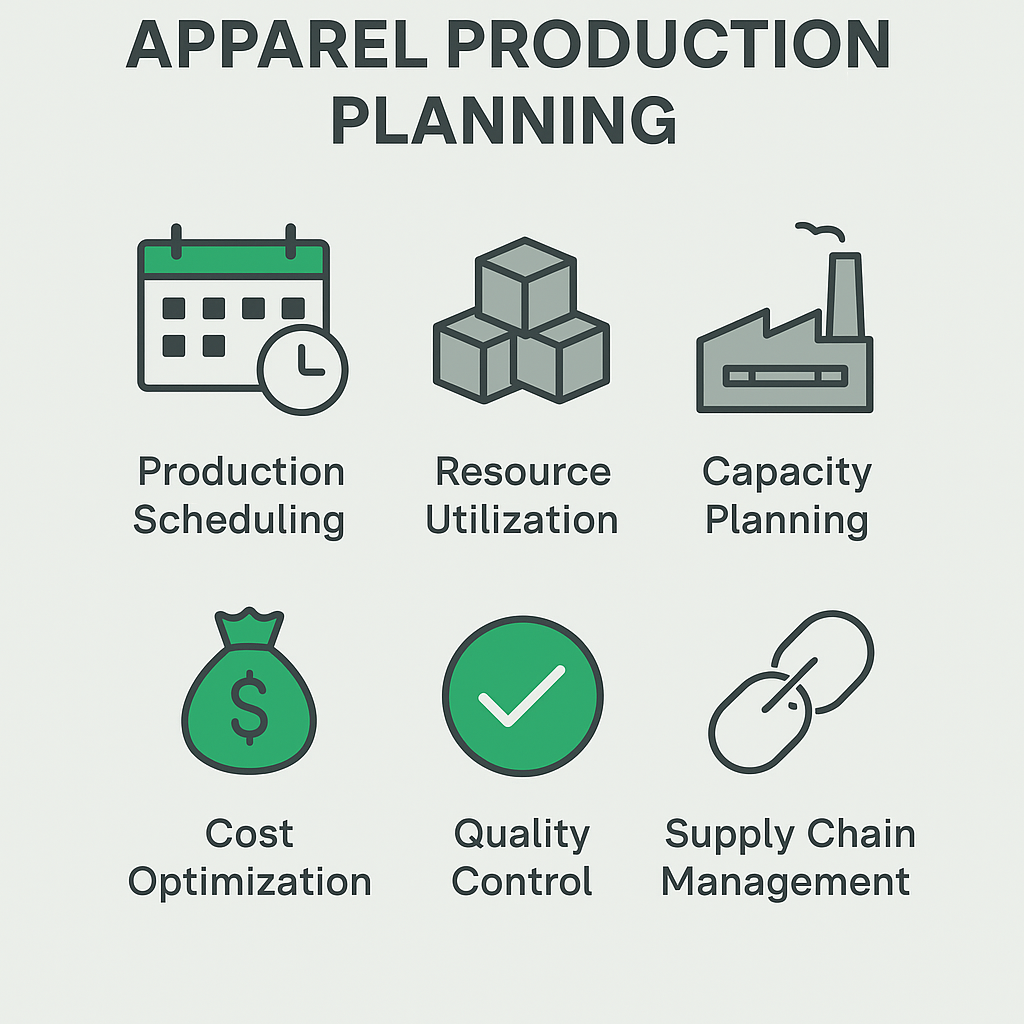
Apparel production and control is needed to plan and manage the production plan for every order from start to finish. It helps to map out the necessary things for optimum production and overcoming any sudden issues. Another crucial aspect is identifying the stage of production that helps to meet the deadlines.
The factors to consider for production planning include
- Production Scheduling
Scheduling involves determining the ideal time required for processes such as fabric selection, cutting, dyeing, and washing.
- Resource Utilization
Creating a list of materials required to fulfill a particular order. Also, determining whether the materials will be sourced locally or internationally.
- Capacity Planning
Establishing the production capacity that will be sufficient to meet the demands. An important consideration is minimizing the overall cost of production.
- Cost Optimization
Proper cost estimation is required if the manufacturer is looking to gain profits. Optimizing costs helps to enhance profitability and maintain competitiveness.
- Quality Control
Inspection or quality control is done from raw material selection to final product to ensure high-quality products. Moreover, identifying defects after production leads to costly reworks, and wastage of resources.
- Supply Chain Management
Supply chain plays a key role when it comes to procuring raw materials, fabrics, and other accessories of production from different suppliers.
The 4 Key Aspects of Apparel Planning ( Fabric Planning)
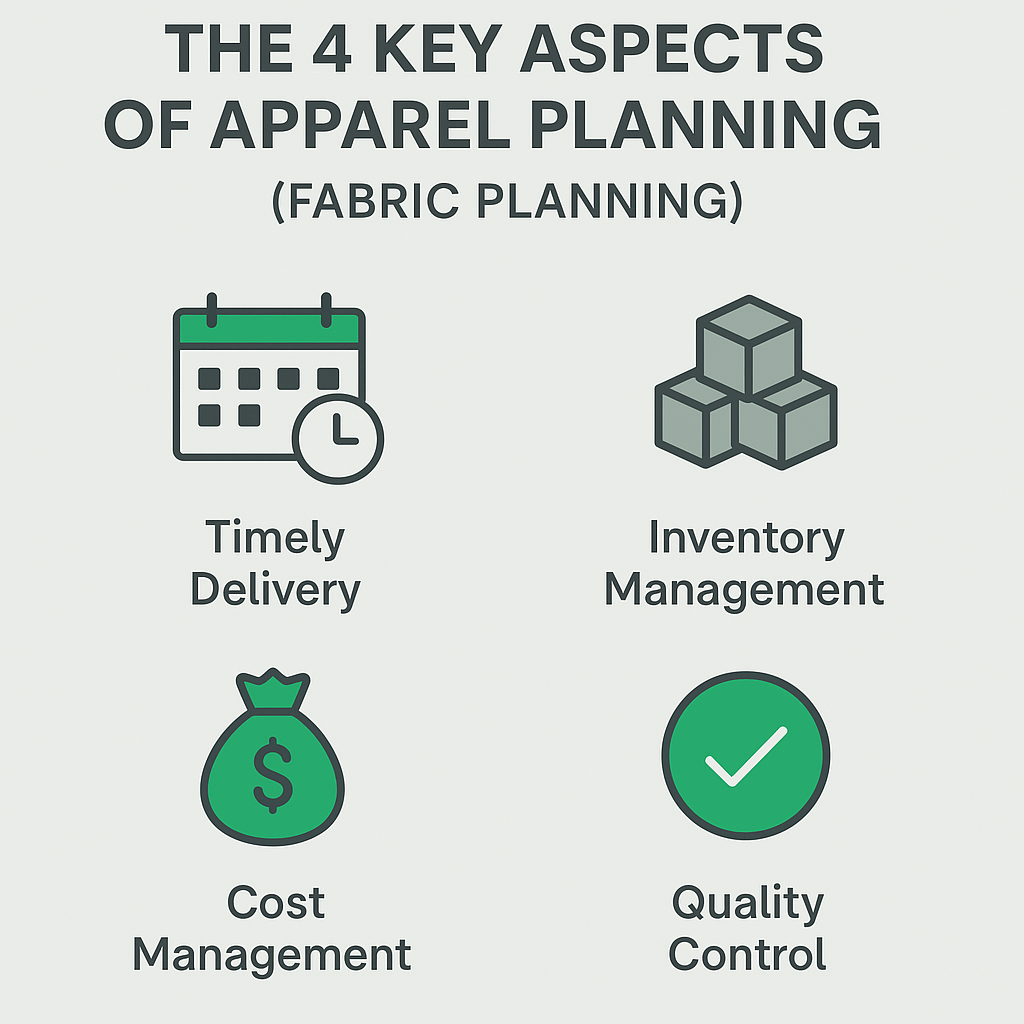
Like other industries, production planning is the backbone of a textile manufacturing operation. It influences everything from raw material procurement to the final delivery of products. An effective system not only streamlines workflows but also minimizes disruptions that potentially lead to delays and added expenses.
Apparel Production Management Software - TrackIT
Book a Free Demo for TrackIT
1. Timely Delivery
For a textile brand, sales and revenue are directly dependent on customer satisfaction. Customers today expect quick turnaround times with little flexibility for delays.
To meet these demands, every step of the manufacturing process from cutting and sewing to dyeing, and finishing must be scheduled with precision. By performing advanced planning, it is easy to anticipate potential bottlenecks and proactively allocate resources to avoid delays.
Detailed timelines are done whether it's material sourcing or final quality checks. On-time delivery helps brands build a strong reputation and foster customer loyalty.
2. Inventory Management
Managing inventory levels is a key aspect to find the right balance between availability and cost-efficiency. Overstocking ties up capital and requires additional storage space, while stockouts lead to lost sales and disappointed customers.
The two factors that achieve the balance are forecasting demand accurately and aligning production schedules accordingly. Lean inventory practices ensure products are available when needed, reduce waste, and prevent unnecessary costs.
An integral element is preparing material resource planning where material requirement is based on approved samples and buyer specifications. The textile brand must also leverage data analytics to predict trends and enhance the inventory management capabilities.
3. Cost Management
A textile brand often operates on thin profit margins which makes cost control essential for sustainability and growth. Real-time visibility and efficient planning can reduce waste, optimize labor usage, and ensure that machinery operates at peak efficiency.
Manufacturers have to source raw materials strategically and take advantage of bulk purchasing or seasonal discounts without overcommitting resources. These practices help to streamline operation, reduce overheads and boost profitability.
4. Quality Control
In a competitive setting such as textile, it is hard to maintain optimal quality while keeping the costs down. However, the balance is possible by efficient production planning. Quality control is integrated at every stage of the process, ensuring that products meet customer expectations without rework or defects that inflate costs.
👉READ: How Real-Time Production Tracking Boosts Efficiency & Reduce Costs
The Common Issues in Production Planning in Apparel Industry
Efficient production planning is a strategic tool that allows textile companies to meet market demands, adapt to shifting consumer preferences, and stay ahead in a dynamic industry. With the right systems and processes in place, production planning can transform challenges into opportunities for growth and innovation. However, there are challenges in every stage of production.
Let us view some of the major ones
Communication Breakdown
One of the most common issues is communication breakdowns, particularly with global vendors. It is due to teams being spread across different time zones and relying on manual updates.
Using Inconsistent or outdated communication result in inaccurate production statuses and prevents the decision-makers to respond to emerging issues in a timely manner.
For example, a delay at a fabric dyeing facility halfway across the world can cascade through the supply chain and affect cutting, stitching, and final delivery deadlines.
Approval Delays
When communication channels are scattered then approval delays are quite common. In traditional workflows, approvals usually rely on email chains, spreadsheets, or even paper trails where critical information can easily fall through the cracks.
This lack of centralized communication causes significant time losses, as teams wait for updates or clarifications. The delays not only extend production timelines but also increase costs due to idle machinery, wasted materials, or expedited shipping fees to meet deadlines.
Unpredictability
Unpredictable disruptions, such as labor strikes, machinery breakdowns, or quality control issues, further complicate conventional production planning. These events can bring operations to a standstill, impacting multiple stages of production.
For instance, a sudden strike in a key supplier's region might delay the shipment of raw materials, forcing manufacturers to scramble for alternatives at a higher cost. Similarly, machinery breakdowns or unexpected quality defects can result in rework or production halts, jeopardizing on-time delivery and customer satisfaction.
How TrackIT Improves Garment Production Planning – Request a Demo or Get Pricing
TrackIT, Triple Tree Solutions’ flagship digital production tracking software, provides a powerful remedy by transforming traditional production planning into a real-time, data-driven process.
Real-Time Production Visibility – Book a Live Demo
TrackIT enables brands to plan, track, and manage production milestones digitally from initial order confirmation to final shipment. Its live dashboards give planners instant access to factory progress, capacity utilization, and work-in-process data.
• Detect delays the moment they occur and take corrective action before deadlines slip.
• Identify production bottlenecks across cutting, sewing, finishing, and packing lines.
• Compare actual vs. planned lead times to keep every style on schedule.
➡️ See it in action → click here to book a live TrackIT demo to explore real-time milestone tracking.
End-to-End Approval & Communication
Production planning often suffers from email overload and scattered approvals. TrackIT consolidates communication into a single platform with digital approval workflows and automatic alerts.
• Eliminate approval delays by routing tasks to the right stakeholders.
• Maintain a complete audit trail for compliance and vendor accountability.
• Reduce miscommunication between sourcing teams, factories, and logistics providers.
Data-Driven KPI Management
With TrackIT, planners can monitor key production KPIs—on-time delivery rate, line efficiency, and first-pass yield—in real time. Built-in analytics highlight performance trends and supplier reliability scores, helping brands lower rework costs and improve OTIF (On Time In Full) metrics.
• Brands using TrackIT have reported 20–30% reductions in late shipments and significant improvements in factory efficiency.
Fast Implementation & ROI
TrackIT is cloud-based, allowing rapid rollout across multiple factories with minimal IT overhead. Implementation can begin in weeks, with measurable ROI, often within a single season, through reduced lead times, improved visibility, and lower penalty costs.
Conclusion
In the fiercely competitive textile industry, the integration of technology for production planning and tracking has become a necessity. Digital production tracking software such as TrackIT can help mitigate the common problems encountered in the traditional processes like approval delays, communication breakdowns, and delayed deliveries.
By leveraging technology through a digital production tracking software, apparel brands can stay competitive, meet their delivery schedules, manage inventory better, and keep costs in check, all while maintaining the highest level of quality.
Next Step: