


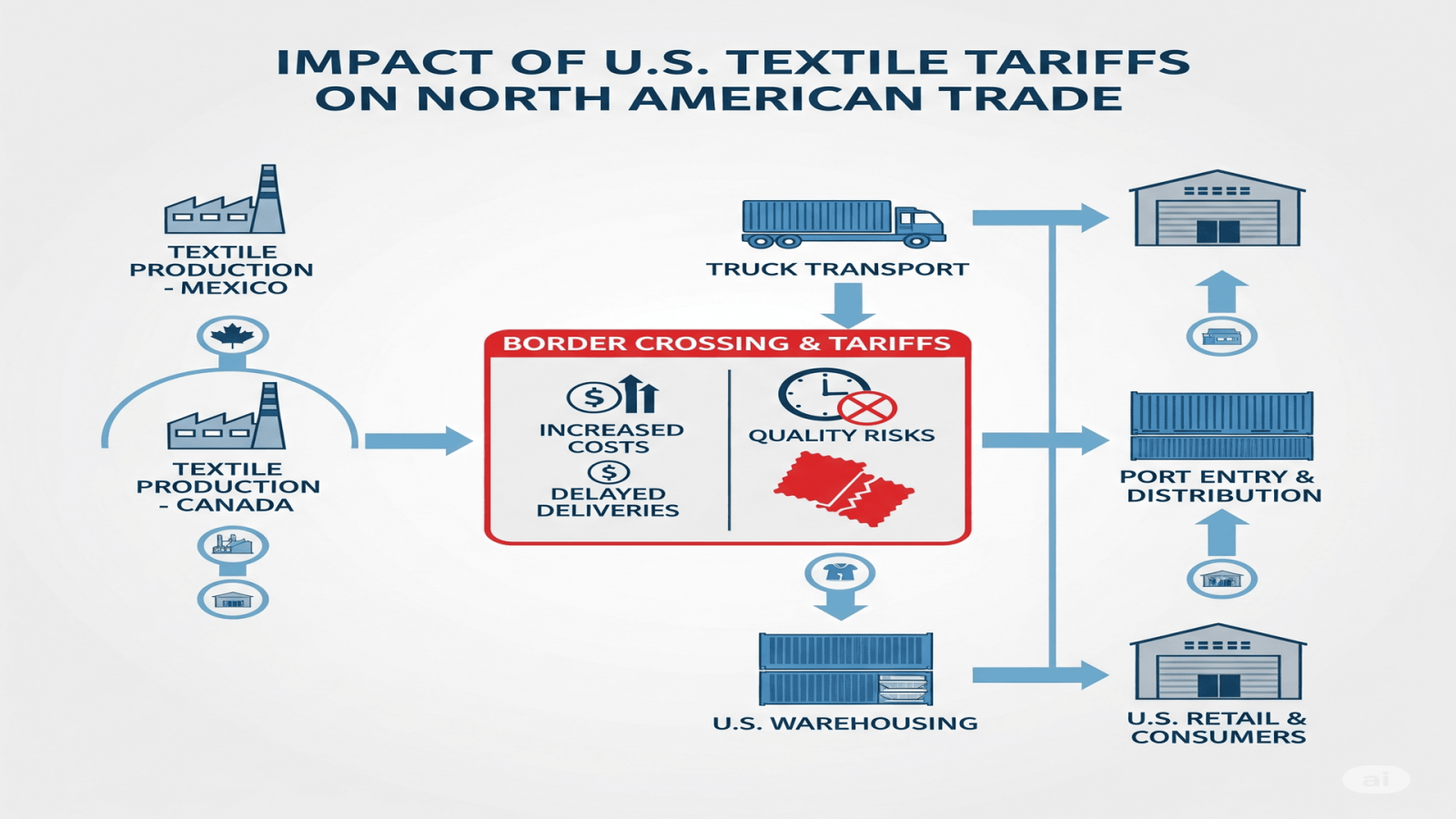
United States has increased tariffs on textile imports from Mexico and Canada. The move is aimed to protect domestic manufacturers amid rising trade tensions. However, the policy shift is disrupting US-Mexico Canada textile trade, inflating production costs, and forcing brands to reassess vendor strategies.
For Mexico the US tariffs range from 35% on finished products to 15% on textile inputs. Conversely, Canada also faces 35% tariffs while some goods are exempt under the United States-Mexico-Canada trade Agreement (USMCA).
However, the National Council of Textile Organizations (NCTO), National Chamber of the Textile Industry (CANAINTEX), and Canadian Textile Industry Association (CTIA), have asked the U.S. government to reconsider. It is because apparel import taxes USA can undermine $20 billion textile trade that comes under the (USMCA).
Whether you are a manufacturer, supply chain manager, or quality control lead, this change demands immediate action. Let us break down the impact of these tariffs and how textile brands can stay competitive.
Why These Tariffs Matter Now
The reinstated tariffs are part of broader geopolitical shifts to reshore U.S. manufacturing and reduce reliance on its trade partners. However, how apparel industry supply chain responds to tariffs is a different story. For apparel, and textile businesses it means:
- Increased landed costs
- Vendor renegotiations
- Tighter production timelines
- Greater risk exposure across quality and logistics
If your textile company is relying on Canadian or Mexican mills and suppliers for low-cost materials or fast turnaround, these tariffs are bound to impact the business negatively. But the good news is: there are tools and strategies to ensure effective textile shipment across the border.
How Tariffs Complicate Apparel Trade with Mexico and Canada
The U.S. apparel industry has long relied on Mexico and Canada as strategic trade partners due to proximity, low labor costs, and trade agreements like USMCA. The result is fast-turnaround production, especially for cut-and-sew operations and textile finishing. However, the reinstated 25% to 30% taxes threaten to upend this mutual collaboration and success.
With higher duties, companies face shrinking margins, longer lead times from switching vendors, and the risk of supply chain fragmentation. What was once a cost-effective North American triangle is now a pressure point for sourcing and logistics operations.
What You Can Do: 3 Strategic Responses to Navigate the Textile Tariffs 2025
While tariffs pose significant challenges, technology can offer a strategic advantage in adapting to higher costs and supply chain disruptions. Digital solutions such as quality management, production tracking, and color consistency tools can help textile businesses optimize efficiency, reduce waste, and maintain compliance despite shifting trade policies.
Triple Tree Solutions has been working closely with clients in textiles and apparel to proactively address tariff disruptions. It’s digital tools—QUONDA, TrackIT, and ColordesQ can help brands address tariffs on textile imports effectively.
🛠️ 1. Improve Quality Control at the Source with QUONDA
Best for: Quality Inspectors or Auditors, Product Development Leads
Rushed re-sourcing often means introducing untested suppliers into your workflow. That’s a recipe for inconsistent quality and costly delays.
QUONDA is a real-time quality inspection platform, gives your production team eyes and ears on the factory floor, no matter where the vendor is located.
✅ Digitize inspections in real-time
✅ Detect issues early in the production cycle
✅ Ensure compliance across all supplier tiers
🔍 Result: Fewer reworks, faster approvals, lower cost per unit—especially when onboarding new non-Canadian/Mexican vendors.
📦 2. Strengthen Supply Chain Visibility with TrackIT
Best for: Supply Chain Heads, Compliance Teams
Tariff hikes often trigger vendor reshuffling. With multiple moving parts, keeping track of lead times, raw material sources, and port delays becomes complex fast.
TrackIT provides end-to-end visibility into the supply chain, helping apparel manufacturers track orders, monitor delays, and streamline vendor collaboration.
✅ Track production & shipping in real-time
✅ Forecast delays and manage lead time risks
✅ Get alerted to shipment or customs bottlenecks
📈 Bonus: Better logistics planning = lower inventory costs and less stress during high-demand seasons.
🎨 3. Maintain Color Consistency with ColordesQ
Best for: Brand Managers, QA Teams, Suppliers
New vendors can bring unexpected surprises—like color mismatches or material variations.
ColordesQ, a digital color management software, helps brands eliminate color inconsistencies and costly lab dips, ensuring that textiles and apparel meet specifications across various manufacturing sites.
✅ Align color tolerances between design and supplier
✅ Automate lab dip approvals
✅ Reduce costly color mismatches and inconsistencies
🎯 Why it matters: Avoid significant operational costs due to inaccurate colors and ensure fewer rejects, faster approvals, and lower production costs.
Additional Ways to Streamline and Boost Apparel Business
Besides using tools to mitigate textile import tariffs, here are more ways on how to manage increased textile tariffs and future-proof your operations:
1. Re-Evaluate Your Sourcing Mix
Now is the time to diversify vendor portfolios. Look for alternatives to sourcing textiles from Mexico and Canada. Search for cost-competitive partners in Vietnam, India, or Central America but those with robust quality control.
2. Strengthen Vendor Agreements
Make sure your contracts account for tariff-based cost adjustments and delivery penalties. Build flexibility into SLAs to handle unforeseen policy changes.
3. Stay Informed & Agile
The current tariff scenario could evolve. A change in U.S. administration or trade policy in 2026 could reverse or escalate tariffs. Subscribe to trusted industry bulletins, and keep legal and compliance teams looped in.
📊 Here is Who’s Most Affected and What Strategy to Implement
Stakeholder | Risk Level | Mitigation Strategy |
Brands | High | Use ColordesQ for visual quality, renegotiate vendor SLAs |
Manufacturers | Medium–High | Use QUONDA to maintain quality in fast pivots |
Retailers | Medium | Monitor supply chain volatility via TrackIT |
Suppliers | High | Proactively improve quality to stay attractive despite tariffs |
📢 Final Thoughts: Don’t Wait—Act Now
The new tariffs will undoubtedly reshape sourcing and production strategies across North America. While the long-term policy landscape remains uncertain, companies that leverage technology-driven efficiencies will weather the cost pressures and maintain profitability.
Tariffs are no longer just an abstract policy but a business reality. The right visibility, inspection, and quality control systems are essential to protect your margins, ensure consistency, and maintain customer trust.
🔗 Feeling the Tariff Pressure and Want to Manage the Transition?
Learn how Triple Tree Solutions can help your business navigate the tariff challenges with digital solutions.