


The apparel supply chain today is complex, fast-moving, and highly vulnerable to disruptions. From raw material sourcing to final delivery, brands must coordinate multiple vendors and factories to ensure on-time delivery. The intricacies and complexities increase if the brand operates globally across different countries and time zones.
In an already competitive setting, brands have to face missed deadlines, poor production visibility, and vendor misalignment. A single delay in fabric approval or production update can push back shipments and lead to brand missing seasonal launch windows.
The delays not just affect timelines but also increase operational costs and lead to stockouts or excess inventory. For fashion brands, where timing and reputation are everything, even small setbacks can have significant financial impact.
Let us discuss why brands need to optimize the apparel supply chain. Also, how TrackIT provide the visibility and control brands need to stay on schedule and prevent delays.
Why Apparel Supply Chains Struggle with Delays
Apparel supply chains are dynamic and multi-layered, making them especially vulnerable to disruptions. Without centralized control and real-time coordination, small gaps quickly turn into costly delays.
Fragmented data across spreadsheets, emails, and systems
Critical production information lives in disconnected tools, making it difficult to get a single, reliable view of progress.
Limited real-time visibility into production stages
Brands often lack up-to-date insights into sampling, approvals, manufacturing, and shipment milestones.
Manual follow-ups with vendors and factories
Teams spend hours chasing updates through calls and emails instead of proactively managing production.
Delays discovered too late to take corrective action
Issues are often identified only after deadlines are missed, leaving little room for recovery.
Scaling challenges with multiple vendors, styles, and geographies
As operations grow, complexity multiplies, increasing the risk of miscommunication and missed timelines.
The Role of Real-Time Production Tracking in Supply Chain Optimization
Traditional apparel supply chains often operate reactively—teams respond to problems only after delays occur, shipments are pushed back, or vendors miss commitments. In contrast, proactive supply chain management focuses on anticipating risks, identifying bottlenecks early, and taking corrective action before timelines are impacted. The key difference lies in visibility and timing.
Real-time production tracking plays a critical role in enabling this proactive approach. In apparel manufacturing—where multiple stages such as sampling, fabric sourcing, cutting, stitching, finishing, and shipping must align precisely—delays at any single milestone can disrupt the entire calendar. Live updates ensure stakeholders always know the exact status of each order.
Milestone-based tracking further improves predictability by breaking production into clearly defined checkpoints with accountable timelines. This structured visibility across orders, styles, and vendors allows teams to compare progress, identify patterns, and intervene early.
By shifting from static reports and scattered spreadsheets to dynamic dashboards, brands gain actionable insights that drive faster decisions, better coordination, and more reliable on-time delivery.
How TrackIT Brings End-to-End Visibility to Apparel Production
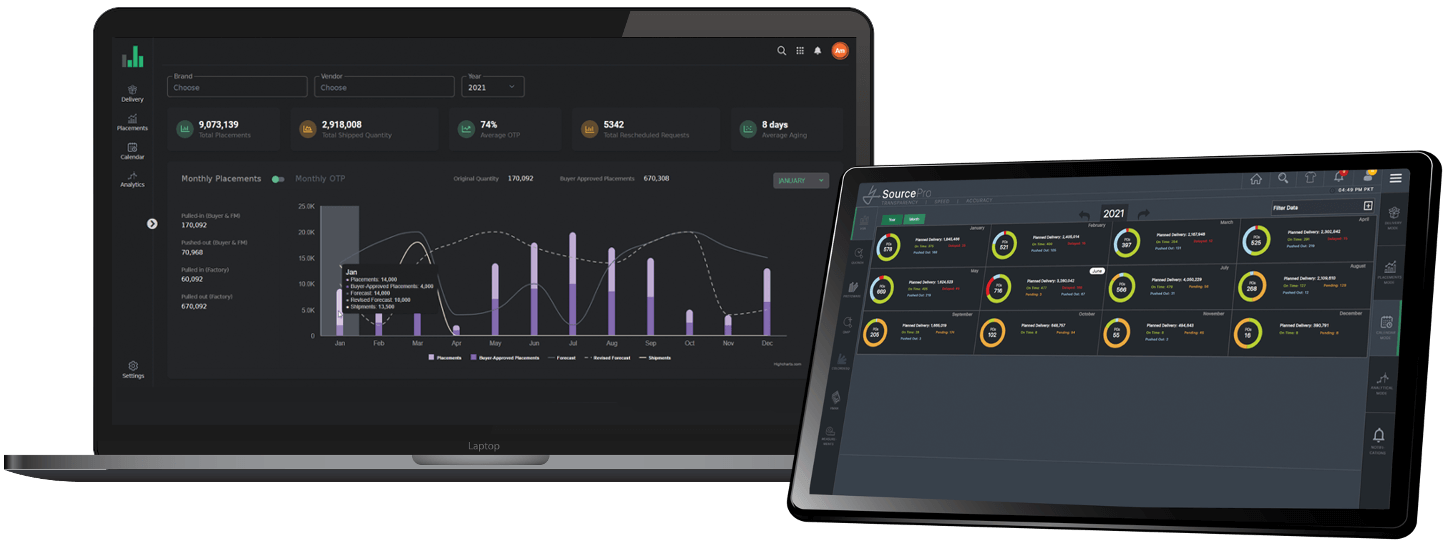
TrackIT is a cloud‑based production tracking and purchase order management solution for textile and apparel supply chains. It consolidates data from vendors, factories, and production stages to provide a centralized view of every order, milestone, and performance metric.
The real‑time visibility replaces fragmented spreadsheets and scattered emails. TrackIT allows teams to detect delays early, coordinate across stakeholders, and make faster decisions to ensure on-time delivery. By standardizing communication and tracking across global operations, brands reduce errors, enhance collaboration, and manage complex supply chain workflows effectively.
Let us view its features
Centralized dashboard covering all POs, styles, and factories
Offers a unified view of every purchase order, style, and production site so teams can monitor commitments and compare performance without switching tools
Drill-down views from order level to individual production stages
Lets users explore details from high‑level summaries down to specific milestones, revealing exactly where progress is on track or lagging.
Time & Action (T&A) calendar monitoring
Visual T&A calendars show planned vs. actual milestone dates so brands can identify schedule risks before they impact delivery
Live production status updates from vendors
Captures real‑time progress directly from factories via manual, Excel, or integrated inputs, reducing uncertainty and eliminating manual chasing.
Eliminating blind spots and manual status chasing
Replaces scattered emails and spreadsheets with standardized digital updates, closing visibility gaps that cause delays.
Automated alerts and exception management
Sends notifications when milestones slip or production risks emerge, enabling timely intervention
Historical performance analysis by vendor and process
Tracks vendor KPIs and production trends over time, helping brands evaluate reliability and guide future sourcing decisions.
Predictive delivery performance insights
Uses historical and real‑time data to forecast potential delays so teams can plan proactively rather than reactively.
Optimizing Vendor Performance and Accountability
TrackIT empowers apparel brands to improve vendor performance by providing clear, measurable insights across the supply chain. Vendor scorecards and KPI tracking allow brands to evaluate delivery, quality, and responsiveness consistently, fostering accountability. On-time performance (OTP) metrics highlight punctuality, enabling early intervention when delays occur.
Transparent performance data ensures that vendors understand expectations without constant oversight, improving collaboration while reducing micromanagement. With these insights, brands can make data-driven sourcing and capacity decisions, selecting reliable partners and optimizing production workloads. By turning scattered updates into structured performance intelligence, TrackIT helps brands strengthen vendor relationships, minimize delays, and maintain a dependable supply chain.
Streamlining Planning and Execution Across the Supply Chain
Effective apparel supply chains rely on real-time visibility, and TrackIT enables better production planning by replacing spreadsheets with live PO tracking and milestone monitoring. Access to accurate production data improves forecasting, material readiness, and line allocation decisions. Centralized reporting also helps balance capacity across vendors by highlighting current workloads, delivery performance, and bottlenecks, allowing brands to distribute orders strategically and avoid overburdening key suppliers.
By flagging delays and quality risks early, the system reduces rework and last-minute firefighting that disrupts delivery schedules. A shared platform aligns sourcing, production, and logistics teams around the same data, eliminating fragmented communication. With centralized dashboards and real-time updates, decision-makers can respond faster to exceptions and keep execution tightly coordinated across the supply chain.
Measurable Business Impact of Using TrackIT
Implementing TrackIT creates clear, measurable advantages across apparel operations by improving visibility, control, and execution discipline.
- Real-time milestone tracking and proactive alerts help teams identify risks early and prevent bottlenecks before they disrupt delivery schedules.
- Continuous monitoring of production stages ensures better adherence to critical paths and shipment timelines.
- Early issue detection reduces last-minute corrections, minimizing reliance on costly emergency logistics.
- Transparent performance tracking and shared data foster accountability, clearer communication, and stronger supplier collaboration.
- Standardized workflows and centralized dashboards support higher order volumes without increasing manual coordination complexity.
- A single source of truth improves oversight across orders, vendors, and production stages.
- Reduced delays, fewer errors, and better planning directly contribute to cost savings and improved profitability.
Conclusion
The apparel supply chain landscape is rapidly changing due to tariff tensions, trade disruptions, and increasing geopolitical uncertainty. Brands are under growing pressure to adapt sourcing strategies while maintaining speed, cost efficiency, and delivery reliability.
In this setting, delays are rarely caused by fragmented communication, limited visibility, and reactive decision-making. TrackIT addresses these challenges by bringing structure, transparency, and real-time control to production order tracking. With centralized tracking, proactive alerts, and performance insights, brands can move from reactive issues to proactive management.
If you're looking to improve on-time delivery, reduce avoidable costs, and build a more resilient supply chain, now is the time to modernize your production tracking.
Discover how TrackIT can streamline your operations
Schedule a Demo and See the Impact