


Apparel shipments for brands like Zara and Primark are stuck at airports, with freight costs doubling and delivery timelines collapsing.
Here’s what’s really happening and why it’s getting worse.
The escalating tensions in the Middle East are upending the finely tuned textile and apparel supply chain. At the center of the crisis are two choke points; closure of Strait of Hormuz and disruption of air cargo. Both are triggering long delays, driving operational costs, and causing widespread uncertainty for brands, manufacturers, and retailers.
Air freight costs have surged by as much as 70%, and transit times have stretched to two weeks due to rerouted shipping lanes. Conversely, rising oil prices are increasing the cost of synthetic fibers like polyester and squeezing margins across the value chain.
Manufacturers across key sourcing South Asia hubs are struggling to move finished goods, leaving inventory stranded and seasonal timelines at risk. Similarly, brands and retailers are forced to choose either costly air freight or absorb losses due to delayed deliveries.
With no immediate resolution in sight, the real question ‘can apparel and textile brands sustain this pressure in the long run’
The stakes will run high if companies still operate on lean systems with limited visibility. Integrating digital solutions from Triple Tree can help anticipate disruptions, optimize production, and ensure agile supply chain
Why the Middle East Matters for Apparel Supply Chains
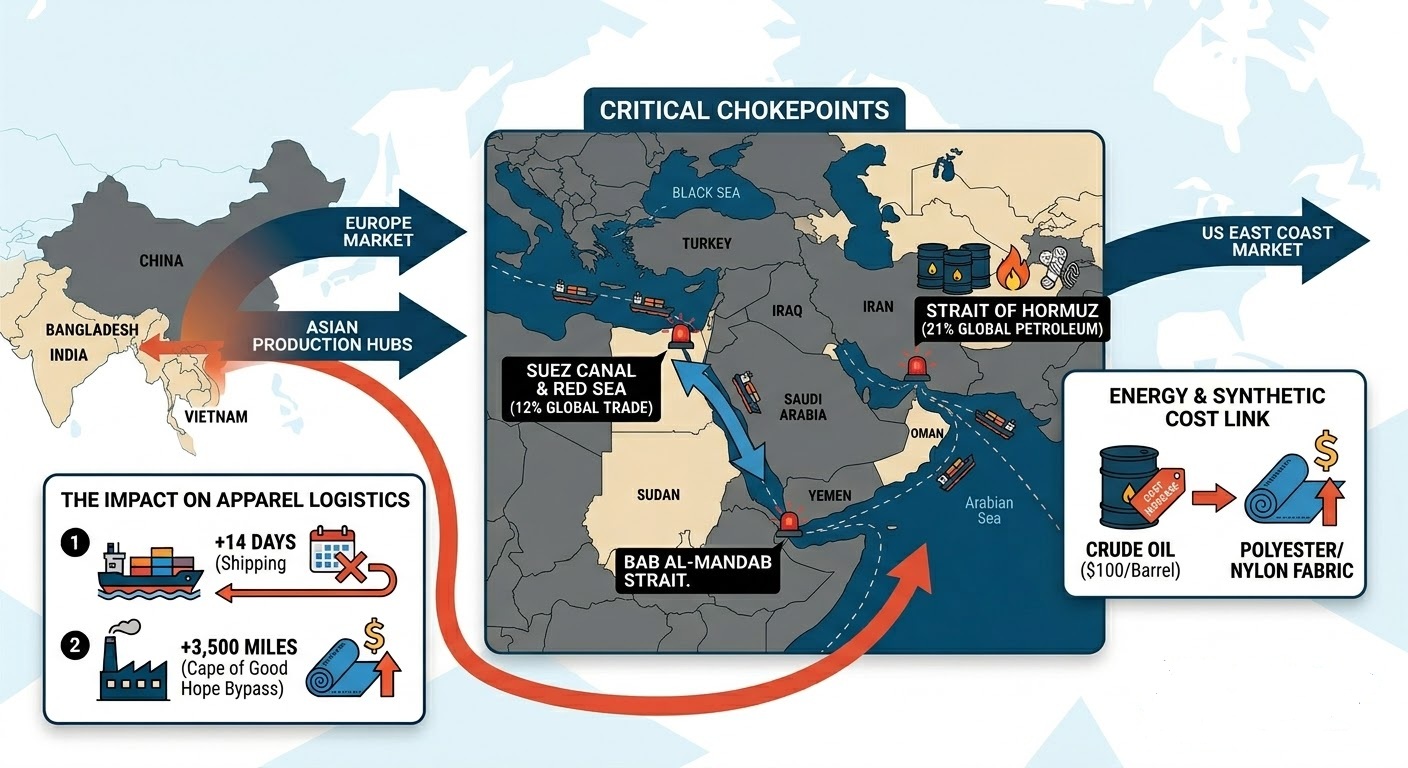
The Middle East sits at the heart of the world’s most critical trade and energy corridors. It also plays a pivotal role in the smooth functioning of global apparel supply chains. The route connects manufactures from Bangladesh, India, and Vietnam to the markets of Europe and the US.
However, the entire region is marked as critical chokepoints
The Suez Canal & Red Sea:
The routes present the shortest link between Asia and Europe and handle 12% of global trade. But current instabilities have forced a "Great Bypass," with vessels rerouting around Africa’s Cape of Good Hope. However, it adds roughly 3,500 miles and 14–20 days to lead times.
The Strait of Hormuz:
It is the most critical oil transit chokepoint that carries 25% of global oil. Any closure sends means a rise in crude oil and increase in price of polyester and other synthetic fiber.
When these crucial corridors tighten, the impact is felt in three ways:
1. Surging Costs: Freight rates on Asia-Europe routes have seen sustained increases of 25–35% above pre-crisis levels, compounded by "Emergency Conflict Surcharges."
2. Inventory Paralysis: In hubs like Bangladesh, thousands of containers often sit stranded as vessels bypass regional ports. It leaves seasonal "Fast Fashion" pileups before they even hit shelves.
3. Costly Air Freight: To meet deadlines, brands are forced into "Panic Air Freight," which is currently 70% more expensive than standard rates.
Impact on Apparel and Textile Sourcing
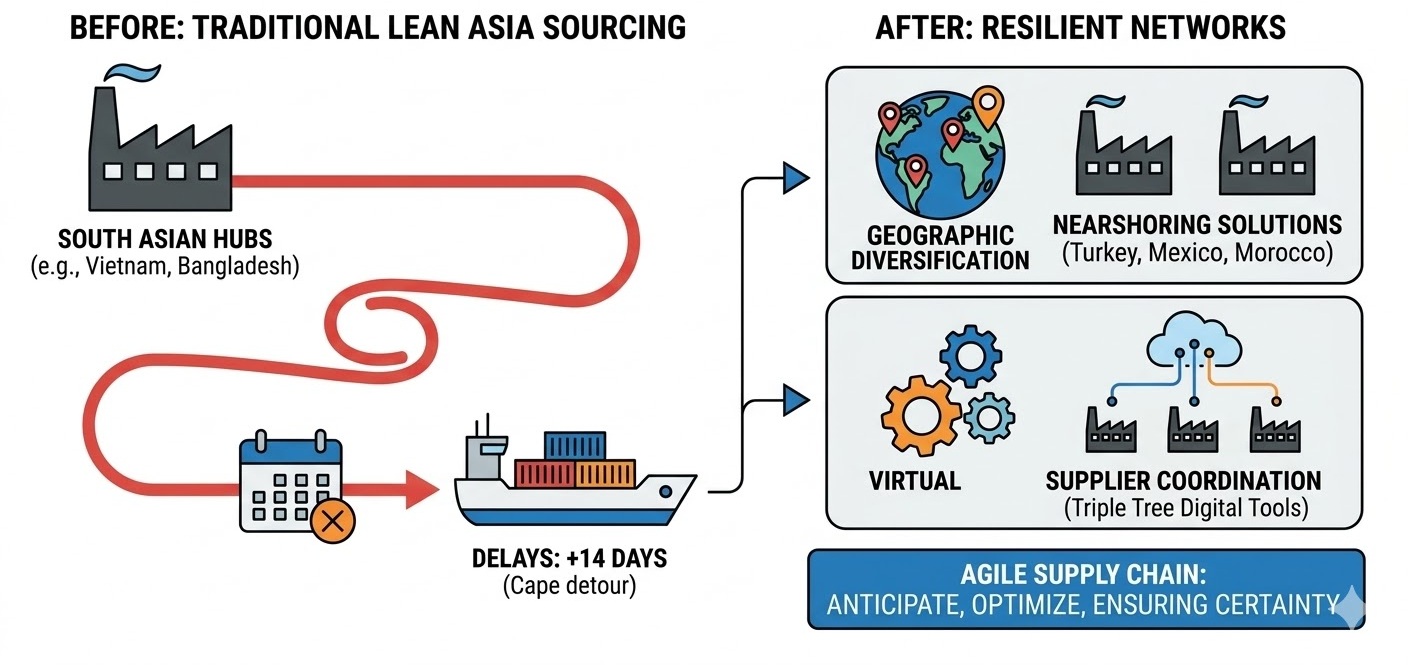
The ongoing disruptions are exposing vulnerabilities in apparel sourcing models, particularly the production hubs across Asia. Countries like China, Bangladesh, and Vietnam have long been integral to global supply due to cost efficiency and scale. However, extended and unpredictable transit schedules are inflating lead times, making it harder to align production with fast-changing consumer demand.
This situation also highlights the risks of concentrated sourcing. When multiple suppliers operate within the same geographic corridor, disruptions whether geopolitical or logistical, stall entire supply chains simultaneously. The lack of geographic diversity limits flexibility and slows response times during crisis.
Brands are now rethinking their sourcing strategy with
Accelerated Nearshoring
To mitigate the "Strait of Hormuz" risk, EU brands are shifting high-turnover orders to Turkey, Morocco, and Eastern Europe. Conversely, US brands are increasing volume in Mexico and Central America.
Sourcing Diversification:
Companies are moving away from "single-country" dependence to a "China + 1" or "South Asia + 1" model. The purpose is to ensure that if one route is choked, another remains open.
Supplier Coordination:
Success in the apparel supply chain now depends on hyper-local coordination. Brands are moving from distant "transactional" relationships to deeply integrated partnerships. This involves sharing real-time data to adjust production schedules.
Why Production Planning Is Becoming Harder
The volatility in the Middle East has turned predictable production planning into a guessing game. Delays in raw materials prevent manufacturers from starting or completing production on schedule.
From specialty zippers to high-performance fabrics, many components are trapped in rerouted sea freight or grounded due to air cargo suspensions. A delay of just three days in receiving a specific thread or button can postpone an entire shipment by weeks. For a global retailer the delays compress already tight seasonal timelines.
These cascading delays and uncertainty add to the operational complexity. Manufacturers are forced to frequently rethink their production calendars that results in
Higher Labor Costs: Factories often resort to expensive overtime shifts to catch up once materials finally arrive.
Margin Erosion: With synthetic fiber prices up 12–15% due to oil market spikes, the cost to produce a single garment increases due to shipping surcharges.
In this "new normal," a lean system without buffer stock or real-time visibility is no longer an asset but a vulnerability.
How Digital Tools Help Apparel Brands Manage Disruptions
The geopolitical uncertainty is exposing the limitations of traditional, manual, and fragmented workflows. When delays and disruptions are constant, the solution lies in integrating digital platforms to ensure visibility, coordination, and faster decision making.
Let us view how digitization helps manage four critical elements of production
1. Apparel Quality Management with QUONDA
.png)
With tight margins, brands cannot afford the additional cost of shipping defective goods. Moreover, maintaining consistent quality across multiple factories is increasingly difficult when supply chains are disrupted. QUONDA is a leading digital quality management solution that ensures seamless quality checks regardless of location or external challenges.
Here is why brands need to integrate QUONDA
Remote Oversight:
Live inspection allows real-time data capture directly from factory floors. Brands can monitor inspection results across global sourcing hubs without needing physical travel.
Faster Decision-Making:
Instant access to inspection data and quality reports allows teams to identify issues and take corrective action immediately. It prevents costly rework and shipment delays.
Consistency:
Standardized digital checklists ensure that every garment meets brand specifications even when the supply chain is under pressure.
2. Apparel Production Visibility with TrackIT
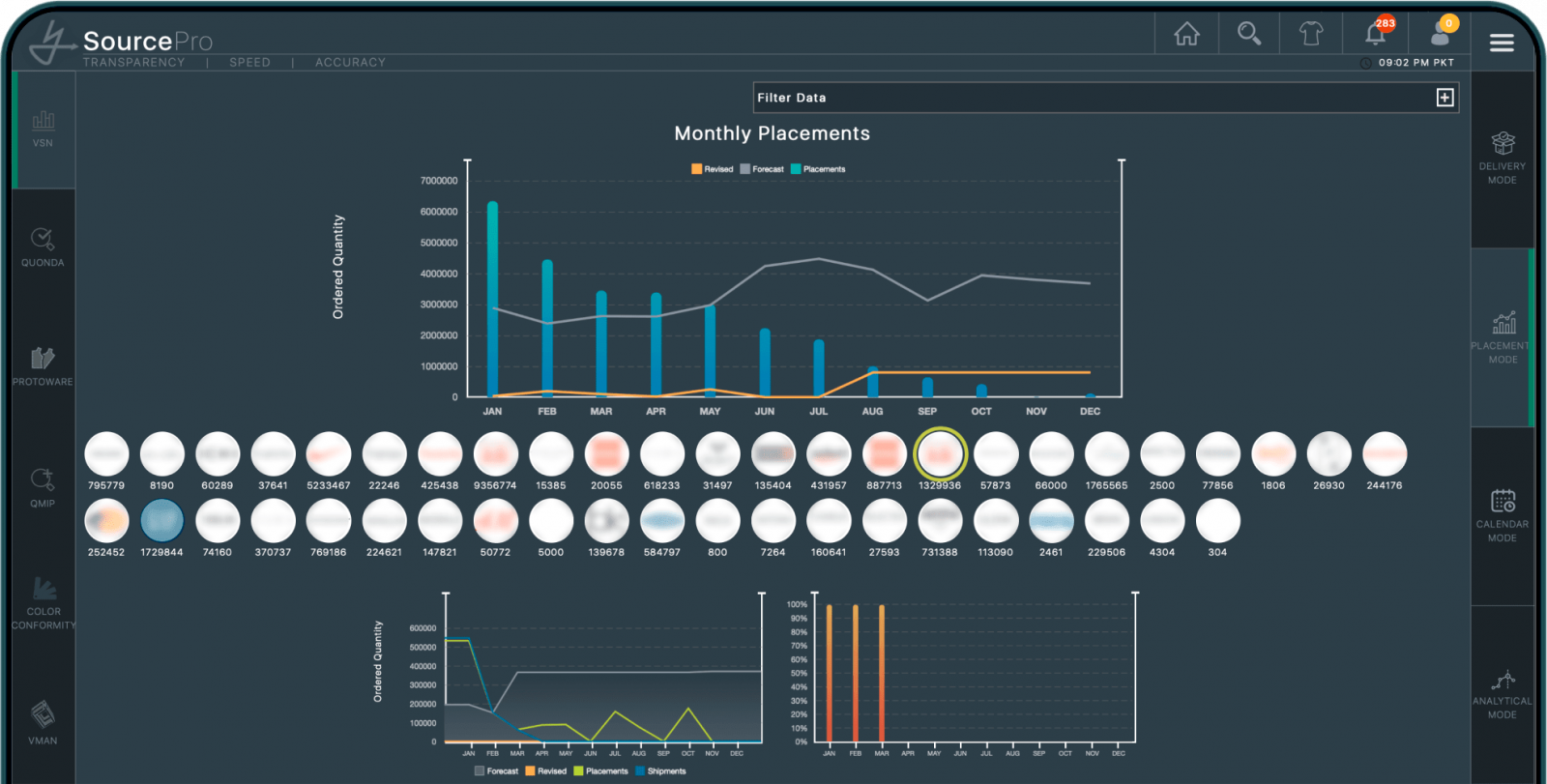
When production timelines are constantly shifting, having real-time insight into factory operations is crucial. TrackIT provides end-to-end visibility into production status and enables brands to monitor multiple suppliers and facilities from a single platform.
Here is why brands need to integrate TrackIT
T&A Calendar & Milestone Tracking:
Breaks down the production cycle into manageable milestones. If a fabric shipment is delayed due to Red Sea rerouting, the system automatically flags the impacted milestones.
Agile Response:
With a clear view of production bottlenecks, brands can quickly pivot. It means rerouting orders to different factories or adjusting marketing timelines based on actual production data.
Enhanced Coordination:
By centralizing communication between brands and manufacturers, TrackIT eliminates the information silos that often lead to cascading delays during a crisis.
3. Fabric Color Accuracy and Consistency with ColordesQ
.png)
Supply chain disruptions often mean that physical lab dips and color swatches are stuck in transit. It stalls the entire product development phase. ColordesQ addresses this by digitizing the color development and approval process.
Here is why brands need to integrate ColordesQ
Spectral Data:
Instead of waiting weeks for a physical sample, ColordesQ utilizes spectral data for instant, objective color matching. It allows evaluations under multiple light sources digitally, ensuring the color is "right first time" regardless of the factory's location.
Maintaining Momentum:
Color data is transmitted instantly via the cloud that reduces reliance on physical samples and lengthy shipping cycles significantly. Brands can ensure product development stay on track even if air cargo and courier services are disrupted in the Middle East.
Global Uniformity:
It ensures that a "Navy Blue" produced in Vietnam perfectly matches the same shade produced in Turkey. It provides the product consistency brands need as they diversify their sourcing to mitigate geopolitical risks.
4. Apparel Vendor Management with VMAN
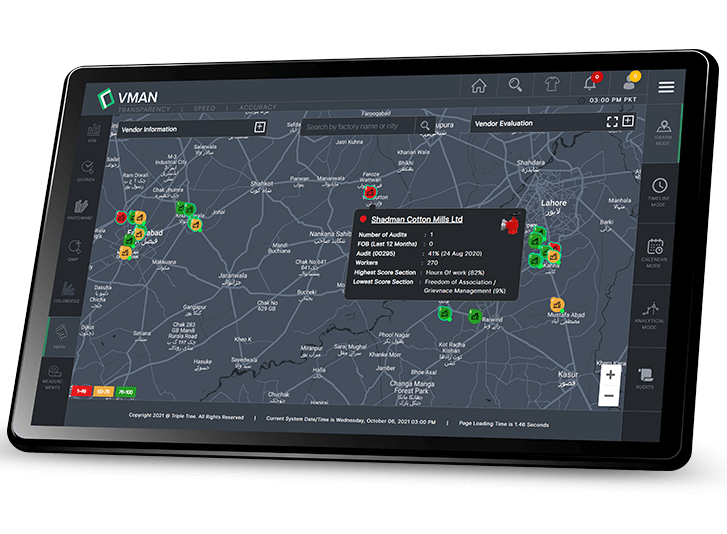
With growing geopolitical uncertainty due to the Middle East conflict, managing a globally distributed vendor base becomes significantly more complex. Disruptions in logistics, compliance risks, and lack of real-time visibility can quickly cascade into delays and increased costs. VMAN enables brands to manage their vendor network with real-time insights and compliance tracking to reduce operational risks across the supply chain.
Here is why brands need to integrate VMAN
Real-Time Vendor Ratings & Status Maps
Gain instant visibility into vendor performance and geographic distribution. In a crisis situation, brands can quickly identify high-risk regions, reroute sourcing, and prioritize reliable vendors without disrupting production.
Corrective Action Plans (CAPs)
When disruptions cause delays or compliance issues, VMAN allows brands to assign and track CAPA (corrective actions) in real time. This ensures faster issue resolution, minimizes production setbacks, and maintains quality standards even under pressure.
360° Vendor Assessment & Scorecards
VMAN provides a comprehensive evaluation of vendors across compliance, capacity, and performance metrics. This helps brands make strategic sourcing decisions, shift orders to dependable partners, and reduce dependency on unstable regions during geopolitical disruptions
What Apparel Brands Should Do Next
In these testing times, apparel and textile brands must move beyond reactive measures and build an agile supply chain. Resilience is no longer about avoiding disruption but building the digital infrastructure to outmaneuver it.
Diversify Sourcing Networks:
Reduce over-reliance on a single geographical route by balancing high-volume Asian production with nearshoring options in regions like Turkey, Egypt, or Central America.
Strengthen Supplier Communication:
Move from transactional orders to deep, data-driven partnerships where information on raw material delays is shared instantly to prevent factory bottlenecks.
Invest in Digital Monitoring Systems:
Replace manual, paper-based quality checks with platforms like QUONDA. Similarly, use ColordesQ to maintain brand standards and digital approvals without the need for physical travel or courier-dependent lab dips.
Improve Production Visibility:
Deploy a centralized platform like TrackIT to gain real-time milestone tracking. It ensures your team make informed decisions days before a delay turns into a disaster.
Ready to Enhance your Supply Chain?
Connect with our experts to see how digital solutions can help you reduce risk, improve efficiency, and stay ahead of disruption.